

What is the energy consumption of a PP Compound Active Carbon Filter (if any)?
Jun 18, 2025
Hey there! I'm a supplier of PP Compound Active Carbon Filters, and I often get asked about the energy consumption of these filters. In this blog post, I'll break down everything you need to know about the energy use of PP Compound Active Carbon Filters, if there's any at all.
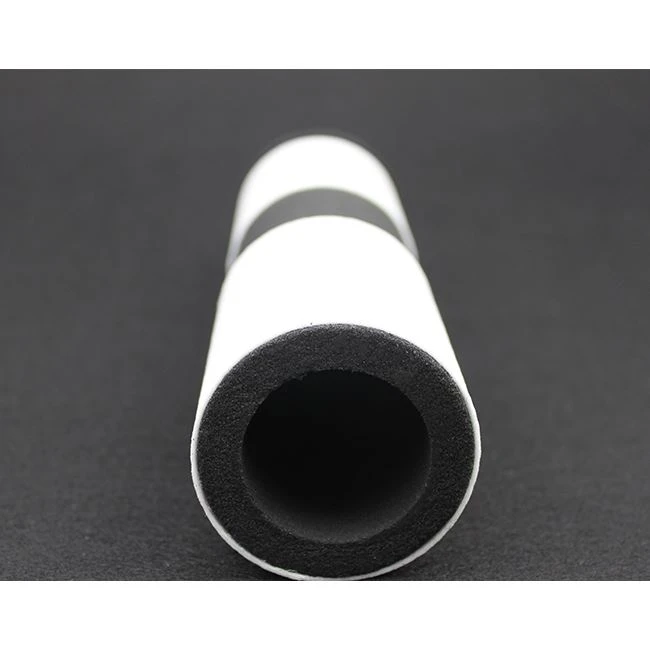
First off, let's understand what a PP Compound Active Carbon Filter is. It's a type of filter that combines polypropylene (PP) and activated carbon. The PP part provides a physical filtration mechanism, trapping larger particles like sediment, rust, and dirt. Meanwhile, the activated carbon is great at adsorbing smaller contaminants such as chlorine, volatile organic compounds (VOCs), and some heavy metals. These filters are commonly used in water purification systems, both for household and industrial applications.
Now, the big question: does a PP Compound Active Carbon Filter consume energy? Well, in most cases, the answer is no. Unlike some high - tech filtration systems that use pumps, motors, or electrical components to function, a basic PP Compound Active Carbon Filter operates passively. It relies on the natural flow of water through the filter media. When water passes through the filter, the physical and chemical properties of the PP and activated carbon do the work of removing impurities without the need for an external energy source.
Let's take a closer look at how this works. When water enters the filter, the PP layer acts as a sieve. The pores in the PP material are sized to catch larger particles. As the water continues to flow, it reaches the activated carbon layer. The activated carbon has a large surface area with tiny pores. These pores attract and hold onto the contaminants through a process called adsorption. This entire process is driven by the water pressure in the system, which is usually provided by the municipal water supply or a well pump (if it's a private water system). The filter itself doesn't require any electricity to perform its purification task.
However, there are some scenarios where there might seem to be an energy connection. For example, in some complex water treatment setups, there could be a pre - pump or a post - pump system. A pre - pump might be used to increase the water pressure before it enters the filter to ensure a more efficient flow through the filter media. A post - pump could be used to boost the water pressure after filtration for distribution in a building. In these cases, the energy consumption is related to the pump operation, not the filter itself.
Let's talk about the benefits of a low - or no - energy - consuming filter like the PP Compound Active Carbon Filter. One of the main advantages is cost - savings. Since there's no need to power the filter with electricity, you don't have to worry about adding to your energy bill. This makes it an economical choice for long - term use, especially for households and small businesses.
Another benefit is its environmental friendliness. With no energy consumption, there's no additional carbon footprint associated with running the filter. In a world where we're all trying to be more sustainable, this is a huge plus. It also means that the filter can be used in areas where access to electricity is limited or unreliable.
Now, let's touch on the different types of applications where these filters are used. For households, a PP Compound Active Carbon Filter can be installed in a variety of ways. You can find Shower Activated Carbon Fiber Filter Cartridge which is designed to improve the quality of shower water. It removes chlorine and other contaminants that can be harsh on your skin and hair. There's also the Composite Filter for Household Water Purification, which can be installed under the sink or as part of a whole - house water filtration system.
In industrial settings, these filters are used in processes where water quality is crucial. For example, in the food and beverage industry, they help ensure that the water used in production is free from impurities. In the pharmaceutical industry, the high - quality filtration provided by PP Compound Active Carbon Filters is essential for maintaining the purity of products.
When it comes to the technical aspects of the filter, the Activated Carbon Composite Filter Sleeve Wall Thickness 1 - 2mm is an important factor. The thickness of the sleeve affects the durability and performance of the filter. A thicker sleeve can provide more structural support and potentially a longer lifespan for the filter.
So, if you're in the market for a reliable, energy - efficient water filtration solution, a PP Compound Active Carbon Filter might be just what you need. Whether you're a homeowner looking to improve your drinking water quality or an industrial operator in need of a high - performance filtration system, these filters offer a great combination of affordability, effectiveness, and environmental friendliness.
If you're interested in learning more about our PP Compound Active Carbon Filters or want to discuss a potential purchase, don't hesitate to reach out. We're here to answer all your questions and help you find the right filter for your specific needs. Let's start a conversation and see how we can work together to improve your water quality.
References

- Water Filtration Handbook: A Guide to Understanding and Selecting Filtration Systems
- Activated Carbon: Properties and Applications in Water Treatment