

What is the difference between a pre - filter and a PP Compound Active Carbon Filter?
Dec 08, 2025
Hey there! If you're in the market for water filters, you've probably come across terms like pre - filter and PP Compound Active Carbon Filter. I'm a supplier of PP Compound Active Carbon Filters, and in this blog, I'll break down the differences between these two types of filters.
What's a Pre - filter?
Let's start with pre - filters. A pre - filter is like the first line of defense in a water filtration system. Its main job is to catch the big stuff. You know, those large particles that can clog up your main filter and reduce its efficiency.
Pre - filters can come in various forms. Some are made of simple mesh materials. These meshes act like a sieve, trapping sediment, sand, and even rust particles that might be in your water supply. For example, if you live in an area where the water comes from a well or an old plumbing system, there's a good chance there'll be some sediment in the water. A pre - filter can stop these particles before they reach the more delicate parts of your filtration system.
Another type of pre - filter is the sediment filter. It's usually made of a porous material that allows water to pass through but catches the larger impurities. Sediment filters are rated by their micron size. The lower the micron rating, the smaller the particles it can trap. For instance, a 5 - micron sediment filter can catch particles that are 5 microns or larger in size.
Pre - filters are relatively inexpensive and easy to replace. They're designed to be disposable, so when they get clogged, you just swap them out for a new one. This helps to extend the lifespan of your main filtration system and keep it running smoothly.
What's a PP Compound Active Carbon Filter?
Now, let's talk about PP Compound Active Carbon Filters. PP stands for polypropylene, which is a type of plastic. These filters are a combination of polypropylene and activated carbon, and they offer a more advanced level of filtration.
Activated carbon is a key component in these filters. It's made by heating carbon - rich materials like coconut shells or coal to a high temperature. This process creates a large number of tiny pores on the surface of the carbon, which gives it a huge surface area. This large surface area allows the activated carbon to adsorb a wide range of contaminants.
Adsorption is different from absorption. When something is adsorbed, it sticks to the surface of the material. In the case of activated carbon, it can adsorb chemicals like chlorine, pesticides, and volatile organic compounds (VOCs). These contaminants are often found in tap water and can have a negative impact on your health and the taste and odor of the water.
The polypropylene part of the filter adds strength and structure. It helps to hold the activated carbon in place and also provides an additional layer of physical filtration. The PP Compound Active Carbon Filter can trap both large particles and smaller contaminants, making it a more comprehensive filtration solution.
Key Differences
Filtration Capacity
The most obvious difference between a pre - filter and a PP Compound Active Carbon Filter is their filtration capacity. A pre - filter is mainly focused on removing large particles like sediment and sand. It's not designed to remove chemicals or other dissolved impurities.
On the other hand, a PP Compound Active Carbon Filter can handle both physical and chemical filtration. It can remove sediment, as well as chemicals like chlorine and VOCs. This makes it a better choice if you're looking for clean, great - tasting water.
Contaminant Removal
Pre - filters are limited in the types of contaminants they can remove. As I mentioned earlier, they're mainly for sediment and larger particles. They won't do much to remove things like heavy metals, pesticides, or the unpleasant taste and odor in water.
PP Compound Active Carbon Filters, however, are much more effective at removing a wide range of contaminants. The activated carbon in the filter can adsorb chemicals, while the polypropylene can trap physical impurities. This dual - action filtration makes it a powerful tool for improving the quality of your water.
Lifespan
Pre - filters usually have a shorter lifespan compared to PP Compound Active Carbon Filters. Since they're designed to catch the big stuff, they get clogged up more quickly. You might need to replace a pre - filter every few months, depending on the quality of your water.
PP Compound Active Carbon Filters, on the other hand, can last longer. They're more efficient at filtration, so they don't get clogged as easily. However, they still need to be replaced periodically, especially if you're using them in a high - flow system or if your water has a high level of contaminants.
Cost
Pre - filters are generally cheaper than PP Compound Active Carbon Filters. They're simple in design and made from basic materials, so they don't cost much to produce. This makes them a cost - effective option for the initial stage of water filtration.
PP Compound Active Carbon Filters are more expensive because of the activated carbon and the more complex manufacturing process. But when you consider the advanced filtration they offer, the cost is often worth it, especially if you're concerned about the quality of your drinking water.
Applications
Pre - filter Applications
Pre - filters are commonly used in a variety of settings. In residential water filtration systems, they're often installed at the point of entry. This means they filter all the water that comes into your house. They're also used in aquariums to prevent sediment from building up in the tank and harming the fish.
In industrial settings, pre - filters are used in cooling towers, boilers, and other water - using equipment. They help to protect the equipment from damage caused by sediment and other large particles.

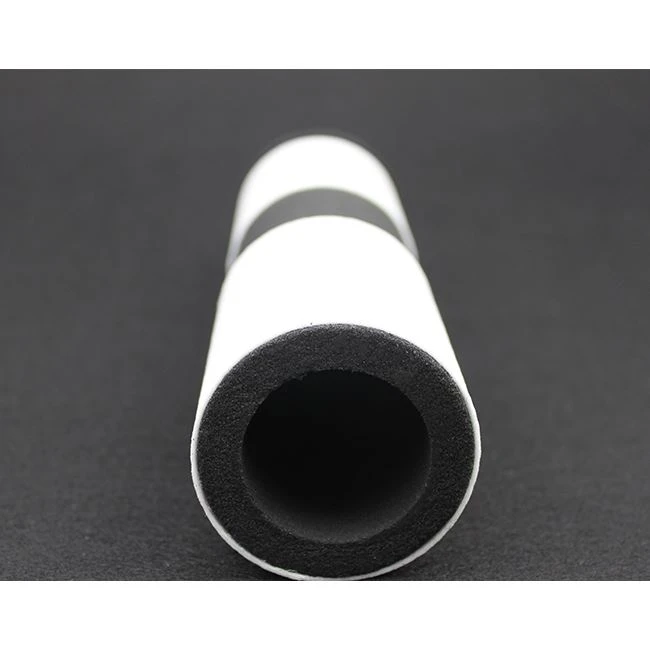
PP Compound Active Carbon Filter Applications
PP Compound Active Carbon Filters are widely used in household water purification systems. They can be found in under - sink filters, countertop filters, and whole - house filtration systems. These filters can improve the taste and odor of your drinking water and remove harmful chemicals.
They're also used in the food and beverage industry. For example, in breweries, these filters can remove chlorine and other contaminants from the water used in the brewing process, which helps to produce a better - tasting beer.
If you're interested in learning more about our PP Compound Active Carbon Filters, you can check out our Activated Carbon Composite Fiber Filter, Composite Filter for Household Water Purification, and Activated Carbon Composite Filter Sleeve Wall Thickness 1 - 2mm.
Why Choose Our PP Compound Active Carbon Filters?
As a supplier of PP Compound Active Carbon Filters, I can tell you that our filters are top - notch. We use high - quality activated carbon and polypropylene materials to ensure the best possible filtration. Our filters are rigorously tested to meet industry standards and provide reliable performance.
We offer a wide range of filter sizes and configurations to suit different needs. Whether you need a filter for a small household system or a large industrial application, we've got you covered.
If you're thinking about upgrading your water filtration system or just want to learn more about our products, feel free to reach out. We're always happy to have a chat about your specific requirements and help you find the right filter for your situation.
In conclusion, while pre - filters and PP Compound Active Carbon Filters both play important roles in water filtration, they have distinct differences. Pre - filters are great for catching the big stuff, while PP Compound Active Carbon Filters offer a more comprehensive level of filtration. If you're looking for clean, great - tasting water, a PP Compound Active Carbon Filter might be the way to go. So, don't hesitate to contact us for more information and start the procurement process. We're here to help you get the best water filtration solution for your needs.
References
- "Water Filtration Handbook" by some well - known author in the water treatment field.
- Industry reports on water filtration technologies.